
‘I promise’ is a powerful statement. It shows more than intent; it’s a live-or-die statement that shows you can be trusted with anything.
So why do so many small business owners mess it up?
Promises are tricky things. Promise too little and your offer falls on deaf ears. Too much and it becomes impossible to deliver.
But a clear promise, well delivered, turns strangers into your greatest allies. And they become the foundation for future growth.
What is a clear promise?
A clear promise is not just your word, but is a simple, specific commitment. It tells your audience what you intend to deliver and why that matters. This isn’t a pithy slogan or tagline (leave those for your clever marketing campaigns), but it’s a permanent line that shows your value and intentions.
A clear promise defines what your audience can expect and what you’ll deliver to them.
This commitment is a powerful branding tool. It reduces uncertainty, which is one of the largest barriers to trust. People are more likely to gravitate to you if they can clearly see what you stand for.
Clear promises remove ambiguity and tell people exactly what to expect. When you deliver on that, you create trust.
Building trust through transparency
Now, this is where people screw up. Small business owners often feel they need to build a promise that makes them look bigger. The problem is, a promise only works when it’s built on authenticity.
A classic example is when freelancers and sole traders use the term ‘we’ in their marketing. It feels natural to want people to think you’re bigger than you are, but any relationship built on that is a lie.
Inflated claims and empty guarantees may seem harmless, but people can spot them. And they’ll damage a brand’s reputation. Instead, being transparent about your process, intentions and even limitations, turns your marketing into meaning. When customers can rely on your words, they become the foundation for trust.
Crafting your clear promise
This can feel incredibly daunting, but I promise (there it is), it doesn’t have to be agonising.
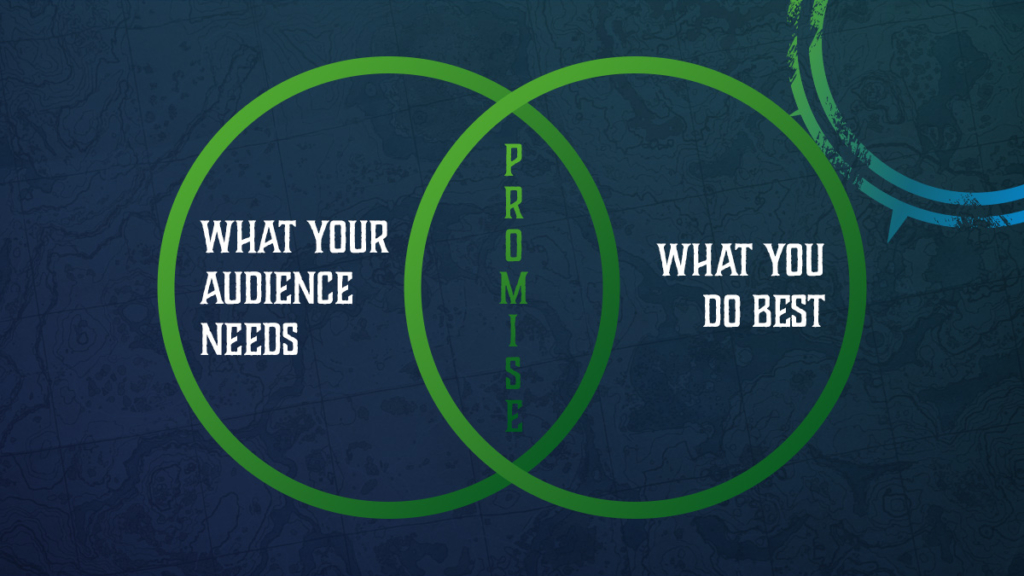
Start with your unique proposition. What is the core change you help people experience? Your promise should sit at the crossover, where what you do best meets what your audience needs most.
As with anything in branding, clear beats clever. Simple, direct language always lands better with your audience as it prevents ambiguity. Use language your audience understands, and ensure it is consistent across all your channels. Conversations, website and social media should all echo the same message so people feel familiarity wherever they encounter your brand.
Most importantly, ensure you can deliver! Your promise is a commitment, and commitments shape your reputation. You must always meet your promise, not just on your best days.
Engaging with your audience
A promise made to no one is utterly pointless. You need people to hear it. This is the most frightening aspect, but it needn’t be. Remember, you have the answers to someone’s problem!
Your newsletter, Q&As, blog articles, communities, comment sections, and events are all places you can interact with your audience. These are brilliant places to live up to your promise and create loyalty.
Creating involvement helps prove your promise, so invite feedback, create challenges that align with your promise and share user experiences. Listening is also important, providing you with the opportunity to refine your promise as your audience explains their needs
Measuring the success of your clear promise
If you want to know that your promise is landing, look at your loyalty.
- Engagement and subscriber rates indicate if your promise is relevant to your audience. Low engagement shows that what you’re saying isn’t relevant.
- Conversion numbers and time to conversion show whether your promise is landing. If you struggle to convert, it’s because customers find your promise difficult to believe.
- Retention and referrals show if you’re meeting your promise. If clients deal with you once or twice before heading elsewhere, your promise isn’t being fulfilled.
Remember, surveys and reviews are great tools to collect feedback and see where you can improve. Use this information to iterate and refine your promise. A strong promise evolves over time as you learn more about your audience and your unique strengths.
Conclusion
Turning uncertainty into confidence is the crux of a relationship. Gaining loyalty is the end goal for any brand, and an actionable promise will help you get there.
Your promise is one of the most powerful relationship-building tools in your arsenal, so use it well.
The promise is one part of your wider identity, and it needs your purpose, vision, values and more to operate efficiently. Here’s a free guidebook to help you discover the core of your brand.